The "Iceberg" Effect: Why Your Software’s Monthly Fee Is Only Half the Story
It’s that time of year again. The spreadsheets are open, the coffee is brewing, and you’re deep into your yearly operational review. You’re looking at the P&L, scanning the line item for "Software Subscriptions," and thinking, “Okay, that looks manageable.”
But hang on a second.
In the NDIS and Aged Care sectors, the price tag on the invoice is rarely the actual cost of the software. If you’re only looking at the monthly license fee, you’re missing the massive chunk of ice floating beneath the surface.
This is what the finance pros call Total Cost of Ownership (TCO). And if you want to run a truly efficient organisation, you need to know how to calculate it.
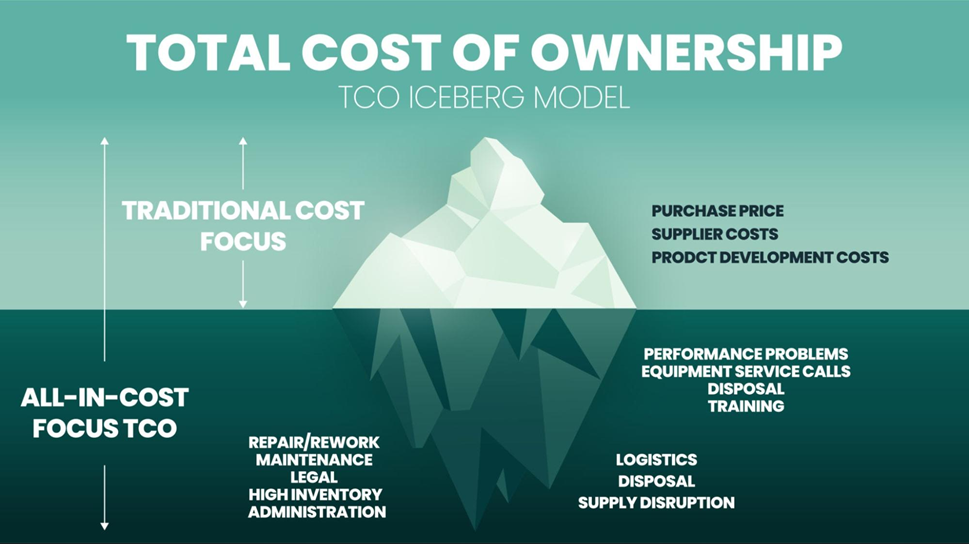
Getty Images
What is Total Cost of Ownership (TCO)?
Simply put, TCO is the sum of buying, operating, and maintaining your software over its entire life.
For a Home Care provider, "maintenance" doesn't just mean server updates (thankfully, cloud software handles that). It means the human effort required to keep the system running.
If your software is "cheap" to buy but "expensive" to use because it requires double-entry or manual workarounds, your TCO is skyrocketing without you even noticing.
The TCO Calculator: A Simple Formula for Home Care
When you’re sitting down for your yearly review, don’t just write down the subscription cost. Use this formula to find your real number:
$$TCO = (L + I + T) + (Admin \times Rate) + (Error \times Risk)$$
Here is the breakdown of what those letters actually mean for your business:
1. The Visible Costs (L + I + T)
● License Fees (L): The monthly or annual bill.
● Implementation (I): Did you have to pay a consultant to set it up?
● Training (T): How many hours did you pay staff to sit in a room learning the system instead of delivering care?
2. The "Efficiency Tax" (Admin x Rate)
This is the big one.
● Double Handling: If your rostering platform doesn’t talk to your payroll system (like Xero or MYOB), how many hours a week does your admin team spend re-typing data?
● The "Gap" Work: Are you using a separate spreadsheet to track NDIS budget usage because your software can't handle the NDIS Pricing Catalogue?
● Calculation Tip: If an admin staff member ($35/hr) spends 5 hours a week fixing roster errors or re-entering data, that "cheap" software is costing you an extra $9,100 per year in hidden wages.
3. The "Oh No" Factor (Error x Risk)
● Compliance Risks: What is the cost of a failed audit because a file was lost?
● Revenue Leakage: Are you missing out on billable travel km because your current app doesn't track it automatically?
How DaySpring Care Lowers Your TCO
At DayspringCare, our motto is "Home Care Made Simple," but it’s also about making it economical. We designed our platform as an End-to-End Solution specifically to crush those hidden costs.
Here is how we flatten the TCO curve:
● One System, Not Three: We handle Lead Management, Rostering, Payroll, and Invoicing. You stop paying for three different subscriptions and stop paying staff to copy-paste data between them.
● Automated Compliance: With the NDIS Pricing Catalogue and SCHADS Award logic built-in, you don't need to pay an external consultant to audit your payroll every month. We do the heavy lifting.
● Empowered Staff: Our Staff Lounge and Care Form features allow support workers to manage their own shifts and notes via the mobile app. This cuts down the phone traffic to your coordinators, saving hours of admin time every week.
Your Yearly Review Action Plan
This week, challenge your assumptions.
1. Take your current software’s monthly fee.
2. Add the cost of the hours your team spends "managing" the software (data entry, fixing errors).
3. Ask yourself: Is this tool actually an asset, or is it a liability?
If the math doesn’t add up, it might be time for a change.
Ready to stop paying the "Efficiency Tax"?
Book a Demo with us today, and let’s look at how an integrated solution can put money back into your budget.
Disclaimer: This blog provides general information for educational purposes and does not constitute professional financial advice.